HD video / 4:3, Italian and Eng. with Eng. Subs / 17:43 min / Stereo / 2025
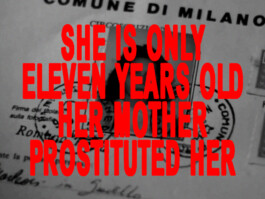
The video work The Death Drive - A Love Story combines collage story telling to portray a gothic tale of forbidden love and betrayal, uprooting family secrets tied to domination and perversion. The work seeks to understand how sexual violence in families transforms and distorts ideas of romantic love and femininity that stems from child rage. In doing so the video confronts the hidden shame of incest and child sex trafficking in families while offering a counter narrative that fathoms how the obsessive need to belong and moreover the search for love, are intrinsic to such violent cycles of abuse. By obfuscating femininity from passivity and motherhood, the video expands on notions of what predators are and could be. Through camp figure skating death spirals, Italian cinema, true crime, and America metal music, The Death Drive - A Love Story presents a vivid and layered history of toxic family structures where power subjugates innocence, love and thus, safety.
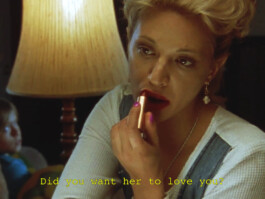
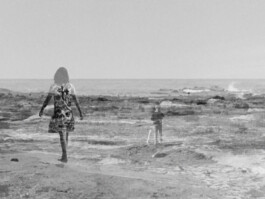
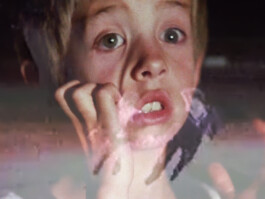
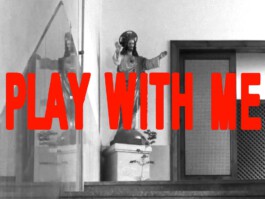
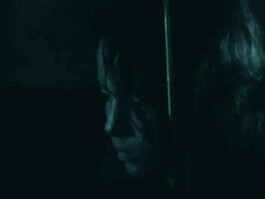
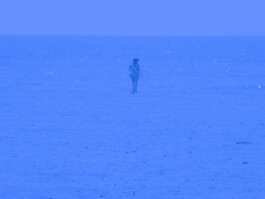
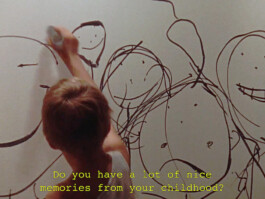
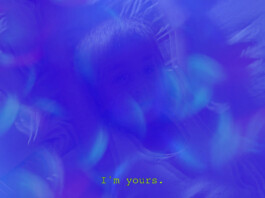
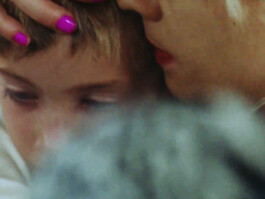
In the video The Death Drive - A Love Story, Christa Joo Hyun D'Angelo investigates the topology of trauma and the drift of love as a form of domination. The title itself - invoking Freud's death drive - situates the work within a logic of destructive repetition, where desire tends more toward annihilation than life. Through a construction that intertwines cinema, pop culture, and testimony - alternating black-and-white and saturated color, sound, dialogue, and monologue - D'Angelo composes a psychic montage, a stratified narrative that probes familial trauma and its inevitable intergenerational transmission.
Drawing inspiration from Rosetta by Jean-Pierre and Luc Dardenne, suspended between childhood and motherhood, as well as from Asia Argento's The Heart is Deceitful Above All Things and Gianni's Amelio's The Stolen Children - all marked by abuse and disquiet - the work unfolds as a parable of contemporary society. This genealogy also includes the case of brothers Erik and Lyle Menendez, who murdered their parents after years of sexual, physical and emotional abuse. Here, love becomes both language and weapon: a site of distorted desire and inevitable punishment. D'Angelo's work ultimately does not represent violence but stages it as an affective grammar that roots itself tentaculary in love, feeding on its very wound.
- Domenico de Chirico
Production Credits
Bottom of the Ocean by Fever Ray Courtesy of Rabid Records
Rooster by Alice in Chains performed by Hans Appelqvist
Sound Design / Mixing by Dong Zhou
Title Design by Martin Falck